
Style?

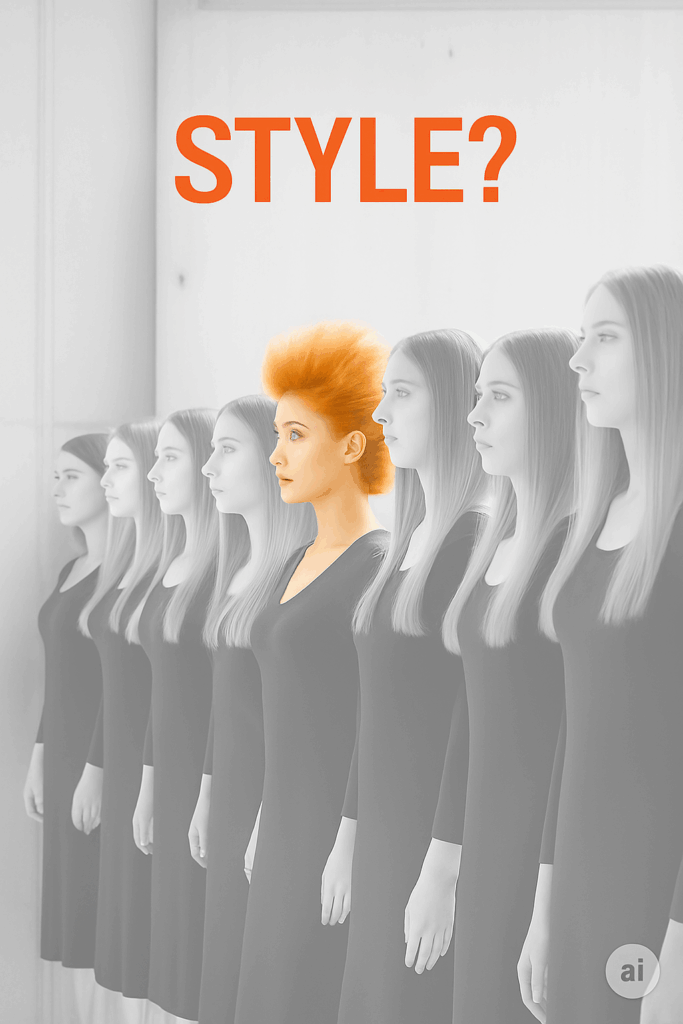
Everyone talks about individuality – but what do you really see in the feeds, at the beach, in everyday life?
Long hair, middle parting – all women copying the same style.

The Kardashian-clone has long since turned into a uniform.
And this style becomes the uni-form.


And yet, what you secretly long for most is to be seen as unique.
When someone says: “Wow, that’s exactly YOU” – that’s your wish.
And you hate it when someone says: “Oh, you’re just like her over there.”

And still, you disguise yourself.
In the Insta feed, at the beach, in everyday life – the same mask, the same silhouette.
Even the poses are copied. You seek out the “Insta-worthy” places everyone knows –
and still you hope to look special?


Coco Chanel once said:
“In order to be irreplaceable, one must always be different.”

Coco was far more than a fashion designer – she was a pioneer.
She freed women from corsets and gave them new freedom through simple elegance.
She didn’t just create fashion – she liberated it.
And with that, she made room for all who dare to be real.

But here lies the irony of fashion history:
What once symbolized liberation has itself become a uniform.
The Chanel suit, the bag, the little black dress – symbols of rebellion and pioneering spirit –
are now mass commodities on runways and in feeds.

That’s how quickly uniqueness flips into imitation.
And again, the question arises:
Where does the mask end – and where does the real begin?


Courage begins where the copy ends.

But – from an early age we learn: Whoever dares to be visibly different risks being laughed at, excluded, or bullied. And that leaves a mark.
The need for belonging is an ancient instinct – and often stronger than the courage to be unique.

Uniformity offers safety.
Those who adapt make fewer decisions, face less need to justify themselves.
The comfort zone feels easier than the struggle for authenticity.

But what (or who?) gets lost in the process?
Cracks

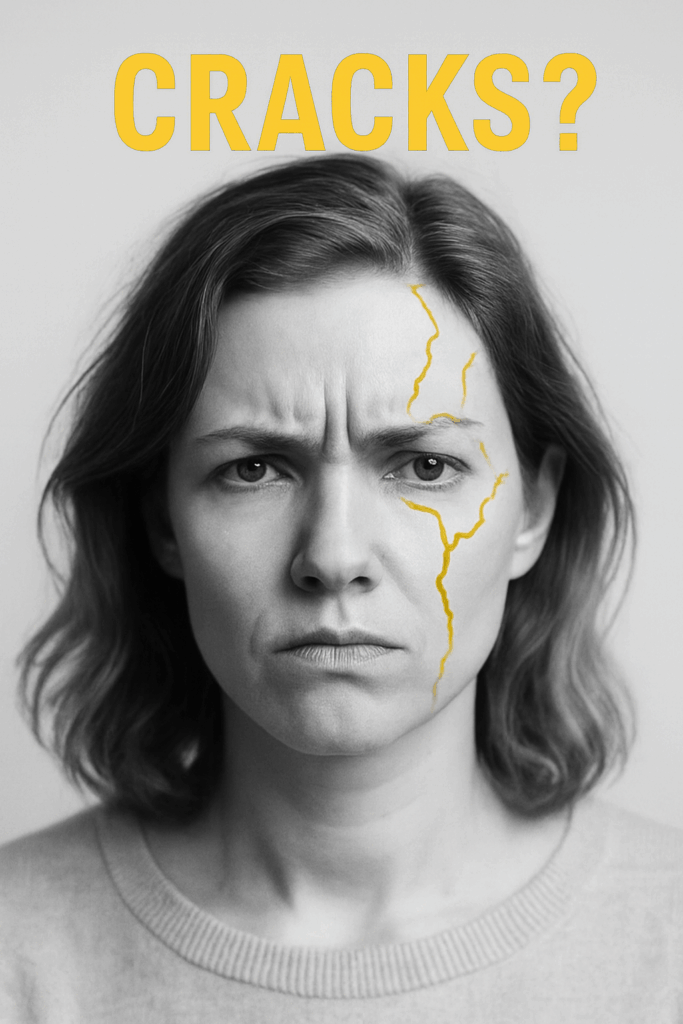
The mask we wear in life is not an enemy.
It protects us. It has carried us through situations we might not have survived otherwise.

But often, we don’t realize how much this mask also limits us.
When someone irritates us, when we are provoked by another’s behavior, it is not only an external trigger.
It is also a sign of what we were never allowed to express in ourselves.

The loud classmate who annoys you, the neighbor who triggers you – they are only holding up a mirror.
Not because they are “wrong,” but because they exaggerate something you don’t allow yourself.

Questions like:
“What or who stops me from acting that way?”
bring back old voices: “Don’t cry. Be good. Don’t be so loud. Sit still. Behave.”
And so we learn to hide parts of our aliveness – behind a mask.

Or maybe you hear sentences like: “That’s just not what one does.”
But who is this one?
Is it not simply the conventions of our culture that we never question, yet which still shape us?

Individuation does not mean tearing off our masks.
It means lovingly recognizing what they protect.
Beneath them lies not danger, but unbroken strength, vitality, and aliveness.

The path inward does not first lead to the truth about the world – but to the truth about ourselves.
And when we begin to live that truth, we are no longer captives of our masks.
We begin to exist, unfiltered and real.


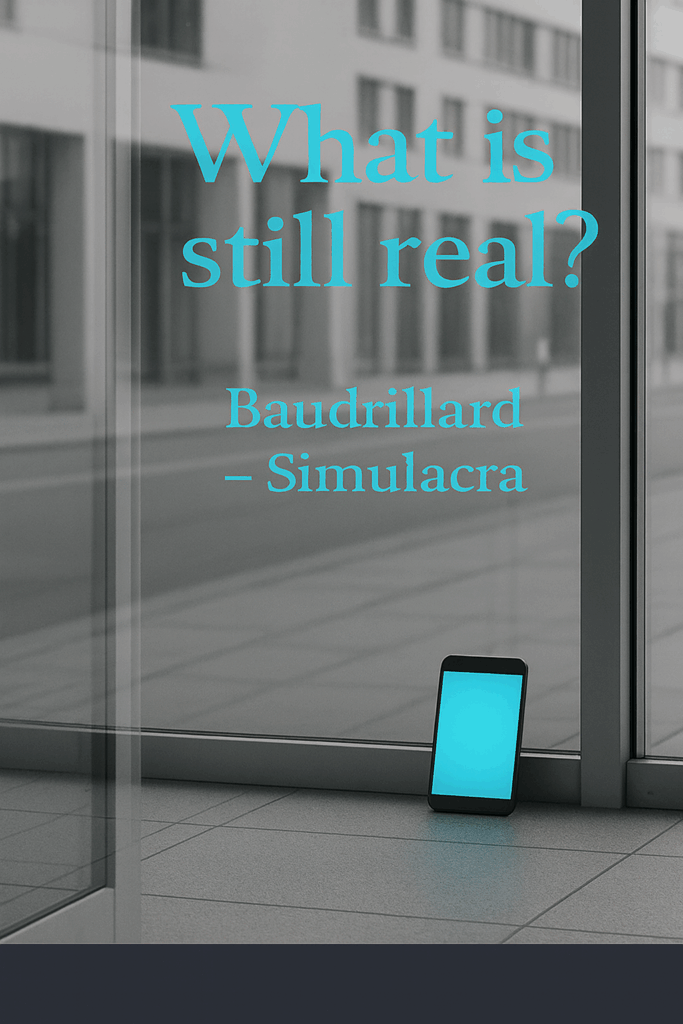
Simulacra

We no longer live in a world of things – we live in a world of signs.

Baudrillard, with his concept of Simulacra, describes how the relationship between original and representation has collapsed. Once there was a thing, and beside it an image of that thing. Today there are only images, signs, and symbols that mirror and amplify each other. The supposed “original” disappears – it is no longer within reach.

So when we say: We live in the copy of the copy, it means that we no longer encounter reality directly, but only through the representations presented to us. Advertising, social media, politics, even medicine: they sell us images that we mistake for reality.

And this is what often makes life feel unreal. When the original can no longer be grasped, existence itself begins to feel dreamlike – smooth, perfect, but not truly tangible. But then what happens to us?

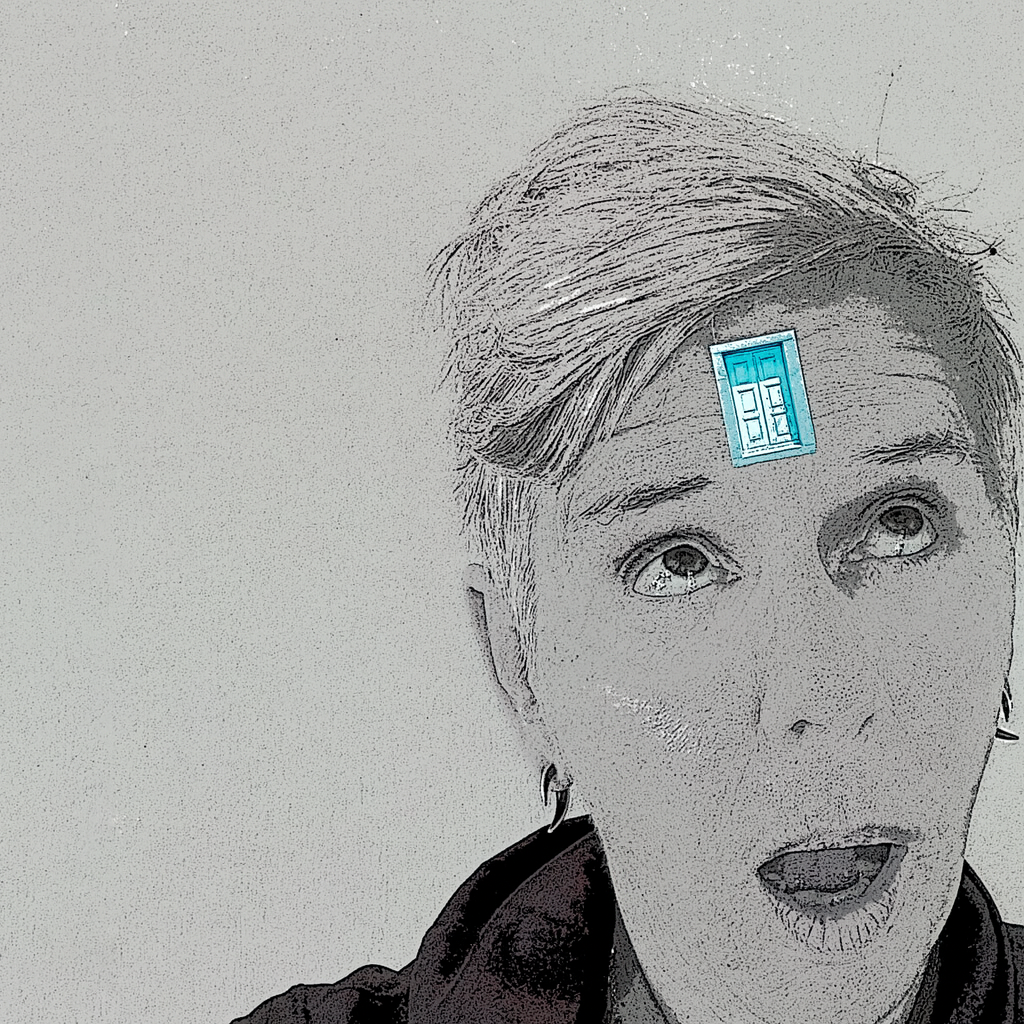
What if you’re not broken – but just waking up?

More and more people are seeking therapy.
Not because they’re “ill” –
but because they’re tired of just functioning.

Tired of pushing through. Of staying quiet inside while the world outside is loud.
Of the silence that screams – and the screaming no one hears.
Of smiling when something deep inside wants to cry.

Maybe it’s not a symptom.
Maybe it’s the beginning of something real.

My practice is open again.
For anyone who no longer wants to turn away from themselves.